The most sensitive decisions are often prepared behind closed doors
Before a business sale is announced, it has often already been assessed financially, discussed and documented.
Before a dispute between shareholders comes to light, it may already have been the subject of weeks of discussions.
Before a restructuring is decided upon, several scenarios may have circulated among the company’s advisers.
Business leaders therefore share some of their most sensitive information long before it becomes visible in the accounts, contracts or legal documents.
Chartered accountants, lawyers, notaries, financial advisers… each may become involved at a different stage, with a specific remit and within a closely regulated professional framework.
The question is therefore not which of them protects information “better”. It is more nuanced.
What happens to strategic information when it moves beyond the dialogue between a business leader and their adviser and begins to circulate among several professionals?
That is precisely when confidentiality deserves to be considered differently.





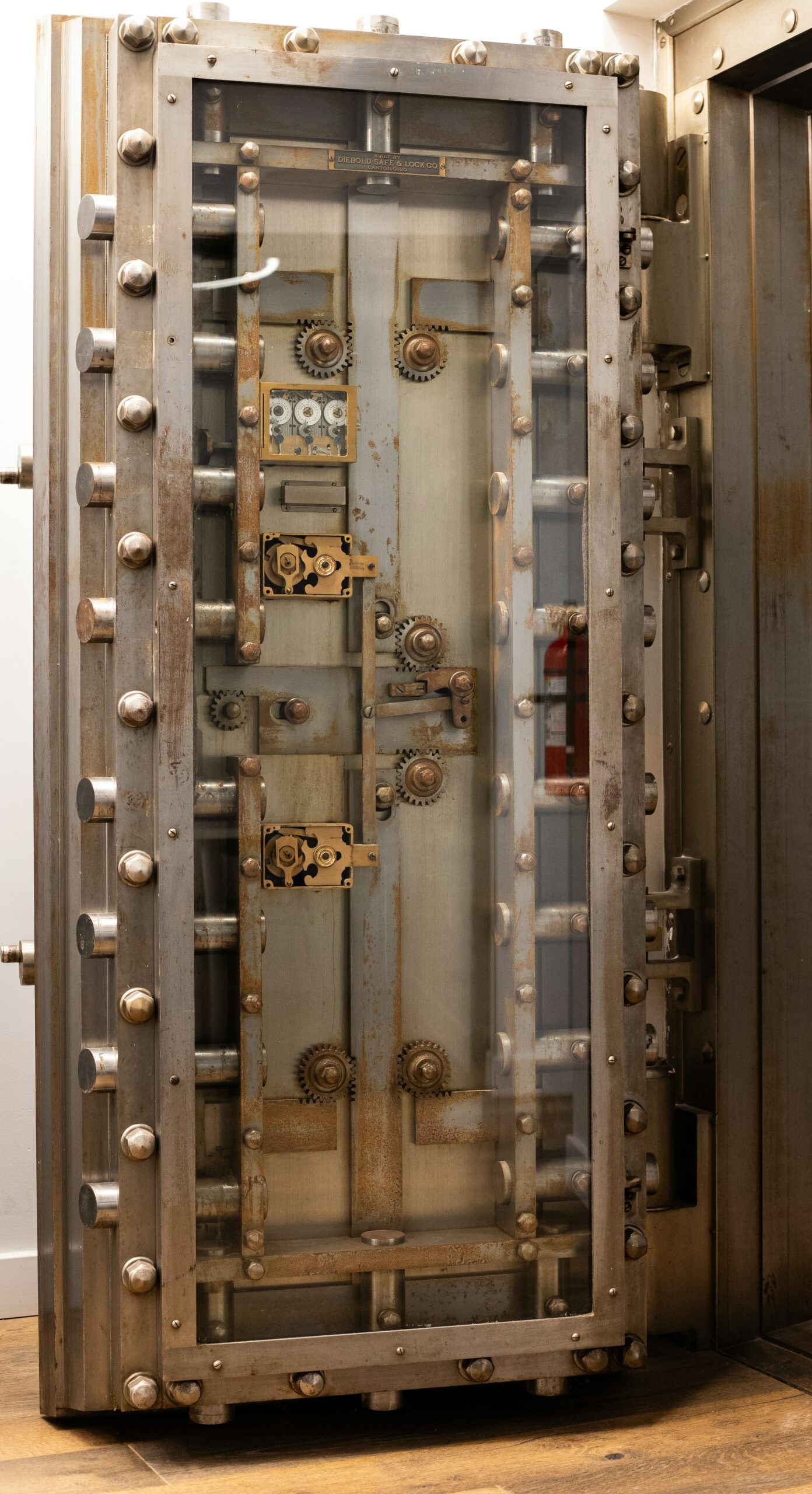

Business leaders share more than figures
A chartered accountant knows more than what a company has already achieved. To understand its financial position, assess a risk or evaluate the consequences of a decision, they may be involved in the business leader’s thinking at a very early stage.
A possible acquisition, a reorganisation of the ownership structure, remuneration arrangements still under consideration, cash flow pressures, a shareholder’s contemplated departure or preparations for a business transfer may all be discussed with them before any final decision is made.
A lawyer may advise on the legal structuring of the same transaction, while a notary may be consulted where wealth, property or inheritance matters are involved.
These professionals therefore have access to more than the consequences of a decision. They sometimes know the assumptions, uncertainties and trade-offs behind it before it officially exists.
For the business leader, their involvement naturally falls within a single circle of trust.
Yet behind this apparent unity, each profession practises according to its own rules.
Confidentiality is not a commercial promise
Professional confidentiality does not depend solely on the quality of the relationship established between a professional and their client.
For chartered accountants in France, Article 21 of the Ordinance of 19 September 1945 expressly provides for this obligation, subject to any statutory provisions to the contrary and under the conditions laid down in Article 226-13 of the French Criminal Code.
Lawyers also practise within a specific framework. Article 66-5 of the French Law of 31 December 1971 protects, in particular, legal advice intended for the client, correspondence exchanged between lawyer and client, certain correspondence between lawyers, meeting notes and, more broadly, documents in the case file.
French notaries are also bound by professional confidentiality. Their code of ethics describes this duty as general and absolute and extends it to those working under their authority, within the framework established by the applicable laws and regulations.
The point is therefore not to establish a hierarchy between these professions. All place confidentiality at the heart of their practice.
The issue arises elsewhere, when several of these professional frameworks come together around the same transaction.
A shared matter does not automatically create a single confidentiality framework
Consider an acquisition
- The business leader discusses the target company’s valuation, financing capacity and risks that could affect the financial balance of the transaction with their chartered accountant.
- Their lawyer then advises on its legal structure.
- A notary may become involved where particular assets or wealth considerations require it. The bank and other advisers may, in turn, receive some of the information.
For the company, everything belongs to the same project and serves the same decision.
The information, meanwhile, has already changed recipients, formats and sometimes contexts several times.
- A financial analysis becomes an attachment.
- A negotiating assumption is repeated in an email.
- A note is passed on to another adviser.
- A document is added to a data room.
- A new participant gains access to a conversation that began several weeks earlier.
This circulation of information has become routine in the management of complex transactions.
From a legal perspective, however, it is not without significance.
When information circulates, the law continues to draw distinctions
A judgment of the French Court of Cassation dated 15 March 2017 provides a particularly clear illustration.
The case concerned correspondence exchanged between a company’s lawyer and that same company’s chartered accountant.
The Court held that the lawyer’s professional confidentiality protection under Article 66-5 did not, as such, cover correspondence exchanged between a lawyer and their client’s chartered accountant.
The significance of this judgment is not that it sets the two professions against each other, still less that it calls into question the duty of professional confidentiality by which the chartered accountant remains bound.
It reveals something more useful for business leaders.
A confidential matter does not automatically confer a uniform legal status on every exchange it generates.
The presence of several trusted professionals around a transaction does not merge their respective frameworks. The nature of the document, its recipient and the context in which it is shared continue to matter.
This distinction may seem theoretical when exchanges remain limited to a few people.
It is much less so when particularly sensitive information begins to be copied, forwarded or incorporated into different workspaces.
When confidentiality becomes a matter of governance
Emails, data rooms, collaborative platforms and shared workspaces have considerably accelerated exchanges between advisers. Information can now move to a different recipient, format or context within seconds, even though it remains just as sensitive.
This fluidity has become essential to managing complex transactions. Yet it places a new demand on business leaders : to maintain control not only over the content of the information, but also over the route it takes.
- Does everyone involved need the same document in its entirety?
- Should an email thread be forwarded when a single attachment is sufficient?
- Should a negotiating assumption that is still being explored be added immediately to a shared workspace?
These decisions might seem purely operational. In reality, they are a matter of information governance.
The aim is clearly not to limit exchanges with advisers.
Chartered accountants, lawyers, notaries and financial advisers must have the information they need to carry out their work fully.
The challenge is to organise this flow of information with the same level of care devoted to the financial, legal or wealth-related structuring of the transaction.
In sensitive matters, the question is therefore no longer simply who can be entrusted with the information.
It becomes more demanding.
- How should it circulate to remain under control?
Strategic information is not protected solely by the duty of professional confidentiality binding the person who receives it.
It is also protected by maintaining control over the route it takes.
Kind regards,
Rabah Lamraoui
Chartered Accountant
www.kaerus.fr